|
OVERVIEW OF AUSTRALIA'S PEOPLE, LAND, STATES
About 84% of Australia's 20 million people
live in cities around the coast covering a
mere 1% of this vast continent. The reason
is simple: Much of Australia is harsh
Outback country, characterized by savanna
land, spectacular rocky outcrops, shifting
deserts, and dry salt lakes. In these parts
of the country, the soil is poor and the
rainfall scarce, and some rivers don't even
make it to the ocean. The roads that
traverse the interior are sometimes barely
distinguishable, and most people choose air
travel or stick to the coastal fringe.
In spectacular contrast, on the coast --
particularly in the east, where most people
live -- Nature's bounty has almost overdone
it. Here, Australia is blessed with one of
the greatest natural attractions in the
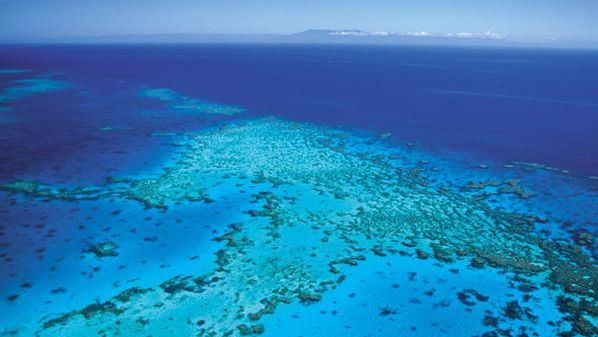
world: the
Great Barrier Reef. There are
also
rainforests in Queensland,
alpine
scenery in
Tasmania, wildflowers in Western
Australia, rolling wine country in South
Australia, a great coastal drive in
Victoria, bird-filled wetlands in the
Northern Territory, and countless sand
beaches more or less everywhere.
One thing Australia realized early on was
the importance of tourism to its economy.
Millions flock here every year. You'll find
Australians to be helpful and friendly, and
services, tours, and food and drink to rival
any in the world. Factor in the landscape,
the native Australian culture, the sunshine,
the animals, and some of the world's best
cities, and you've got a fascinating,
accessible destination full of amazing
diversity and variety.
Australia consists of six states --
New South Wales (NSW), Queensland (QLD),
Victoria (VIC), South Australia (SA),
Western Australia (WA), and Tasmania (TAS)
-- and two internal territories, the
Australian Capital Territory (ACT) and the
Northern Territory (NT). The national
capital is
Canberra, in the ACT.
New South Wales -- Australia's most
populated state is also the most visited by
tourists. They come to see
Sydney -- and who
can blame them? It's one of the most
glamorous and beautiful cities in the world,
with dozens of harbour and ocean beaches in
and around it, and a mixture of bushland and
city development around
Sydney Harbour.
Sydney is also a good base for
day trips or
overnight excursions inland, especially to
the scenic
Blue Mountains and the wineries
of the Hunter Valley.
Queensland -- Without a doubt, the
biggest draw for visitors to Queensland is
the
Great Barrier Reef. Ogling the tropical
fish, sea creatures, and rainbow-hued corals
is a holiday highlight for most people. The
Reef stretches more than 2,000km (1,240
miles) along Queensland's coast, as far
south as Bundaberg, 384km (238 miles) north
of Brisbane, the state capital. Alluring
island resorts dot the coast. Queensland is
also known for its white-sand beaches. One
of the most appealing of Queensland's
destinations is the aquatic playground made
up of the 74
Whitsunday
Islands in the Great Barrier Reef Marine
Park. These mostly uninhabited islands are a
paradise for
kayaking,
snorkelling,
diving,
fishing, hiking, watersports, birding, and
bareboat sailing. Another big attraction is
the lush 110-million-year-old
Daintree
rainforest, just north of
Port Douglas.
The Red Centre -- The eerie silence
of Uluru, also known as
Ayers Rock, is what
draws everyone to the sprawling ocher sands
of the Red Centre, the heart of the Northern
Territory. Many visitors make the delightful
discovery that the lesser-known nearby domes
of Kata Tjuta, or "the Olgas," are even more
spectacular (if that's possible). A
half-day's drive from the Rock brings you to
Kings Canyon, an awesomely lovely desert
gorge popular with hikers. If you visit the
Red Centre, try to spend at least a few days
in Alice Springs. This laid-back Outback
town has the best
Aboriginal arts and crafts
shopping in Australia,
Aboriginal tours, a
world-class desert wildlife park, stunning
scenery, hikes through the stark MacDonnell
Ranges, an Outback ranch to stay at, and
even camel rides along a dry riverbed.
The Top End -- The northwest reaches
of the country (from the rocky red ranges of
the
Kimberley in Western
Australia to the
northern third of the Northern Territory)
encompass what Aussies eloquently dub "the
Top End." This is Crocodile Dundee
territory, a remote, vast, semidesert region
where the cattle probably outnumber the
people. Near the tropical city of
Darwin,
the territory's capital, is
Kakadu National
Park, where you can cruise past crocodiles
on inland billabongs (ponds), bird-watch,
and visit
ancient Aboriginal rock-art sites.
Western Australia -- This is one of
Australia's most wild and beautiful regions.
The seas teem with whales in season, and
thrill-seekers can swim alongside gigantic
but gentle whale sharks on the Northwest
Cape every fall (Mar - June). This cape is
home to one of Australia's best-kept
secrets, a second barrier reef called
Ningaloo Marine Park, which runs for 260km
(161 miles). It's one of the few reefs in
the world to grow on a western coast. You
can snorkel with manta rays here or try the
fantastic diving. In the southwest "hook" of
the continent lies the
Margaret River wine
region. Wild forests, thundering surf,
dramatic cliffs, rich bird life, and wild 'roos
make it one of the country's most attractive
wine regions. The state's capital,
Perth,
has surf beaches and a restored 19th-century
port with a fun atmosphere and some great
museums. In
the Kimberley, you can
visit the
ancient Geikie and Windjana gorges, farms
where the world's best South Sea pearls
grow, and the charming town of
Broome.
South Australia -- Stretched between
Western Australia and Victoria is the
nation's breadbasket, South Australia. The
capital,
Adelaide, is a stately place known
for its conservatism, parks, and churches.
It makes an ideal base for
exploring
Australia's illustrious wine region, the
Barossa Valley. Big labels like Penfolds,
Seppelts, and Wolf Blass are here, but take
time to sniff out the many smaller, though
no less outstanding, vineyards. And it's
less than an hour from the city!
Victoria -- Australia's
second-largest city,
Melbourne, is the
capital of Victoria. Melbourne is more
stately and "Old World" than
Sydney, and
offers an exciting mix of ethnicities and
the country's best
fashion shopping. Nearby
Phillip Island is famous for its Penguin
Parade, during which hundreds of tiny
penguins dash up the beach to their burrows
at dusk. The historic gold-mining city of
Ballarat is not far away. Victoria is also
the site of one of Australia's
great road
trips, the
Great Ocean Road. It stretches
for 106km (66 miles) along the southern
coast, where the eroded rock towers named
the
Twelve Apostles stand tall in the sea.
Australian Capital Territory (ACT) --
Surrounded entirely by New South Wales is
the Australian Capital Territory. The ACT is
made up of bushland and the nation's
capital,
Canberra, a planned city similar in
architectural concept to Washington, D.C. It
has some of the country's
best museums and
great restaurants.
Tasmania -- Last stop before
Antarctica is the island state of Tasmania
with its striking capitol city of
Hobart.
Visit the Apple Isle for its beautiful
national parks, stretches of alpine
wilderness and gloomy forests, fruit and
lavender farms, the world's
best trout
fishing, and an exquisitely slow pace of
life rarely experienced anywhere else. If
you're up to it, you could tackle the
Overland Track, an 85km (53-mile) hiking
trail between
Cradle Mountain and Lake St.
Clair that passes through highland moors,
dense rainforests, and several mountains.
Brief Overview of the Regions and
States of Australia - Travel
Australia
|
SEARCH THIS SITE
USING KEYWORDS |
|
|
|